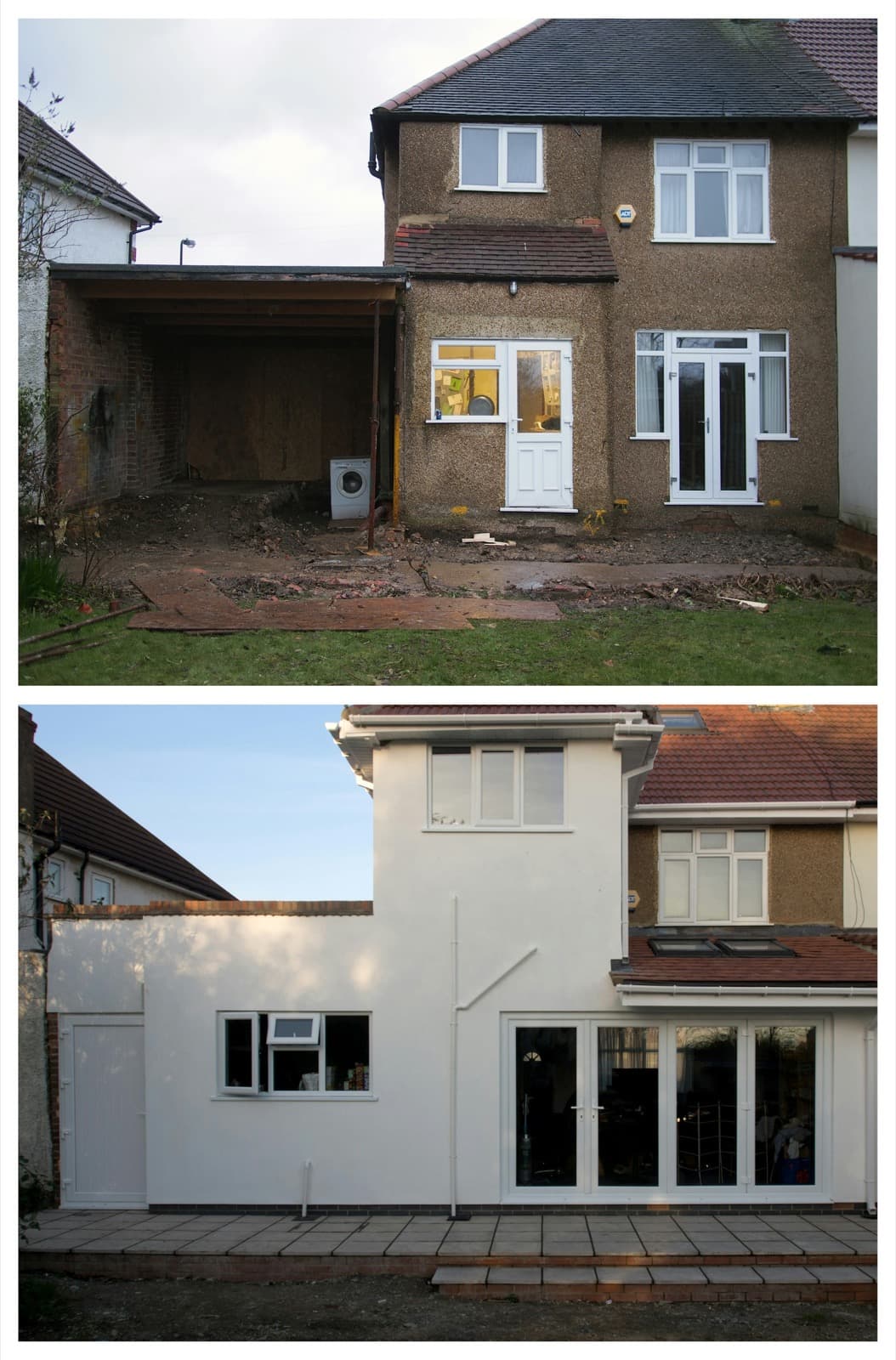
Farmingdale isn't Garden City. Whole-house renovations here aren't $1M Gold Coast restorations — they're practical upgrades that fix a 1965 split-level for a 2026 family. Smaller footprints, mid-century framing, aluminum wiring concerns, and budgets that respect that the home is a $700K asset, not a $4M one.
This guide breaks down what whole-house projects actually cost in Farmingdale in 2026, what's specific to mid-century housing stock here, and the upgrades that return real value vs the ones that look good in magazines but don't pay back.
The Farmingdale renovation philosophy is "make it work, not make it Instagram." Open the floor plan if it actually improves daily life. Update the kitchen and primary bath to current standards. Fix the wiring and HVAC. Skip the marble waterfall island if it doesn't fit how the family actually lives.
Sequence — How a Farmingdale Whole-House Project Runs
Most Farmingdale renovations move through six phases. Knowing the sequence helps you plan finances, school transitions, and life logistics around the work.
Phase 1 — Walkthrough and feasibility (1–2 weeks). Before quotes, a contractor walks the home and identifies the structural questions, electrical baseline (especially aluminum wiring risk), HVAC condition, and where layout changes are realistic. Don't skip this — it prevents expensive surprises later.
Phase 2 — Design and selections (3–6 weeks). Architect drawings if structural changes are involved, finish selections, appliance specs, paint colors. Pace this — rushed selections lead to mid-construction change orders that compound costs.
Phase 3 — Permits (3–6 weeks, runs concurrent with selections). Village of Farmingdale or Town of Oyster Bay filing depending on lot location. Engineered drawings stamped if walls are moving.
Phase 4 — Demo and rough-in (3–8 weeks). Selective demolition, framing changes, rough plumbing, rough electrical (including any aluminum wiring remediation), HVAC reconfiguration, then drywall.
Phase 5 — Finishes (5–12 weeks). Tile, flooring, cabinets, countertops, trim, paint, fixtures, appliances.
Phase 6 — Punch list and certificate of occupancy (2–3 weeks). Adjustments, touch-ups, final inspection. Don't pay the final 10% until punch list closes.
Total: 4–8 months end-to-end depending on scope. Plan for 6 months on a serious gut.
Farmingdale Whole-House Cost Tiers in 2026
Three project types cover almost every Farmingdale whole-house project.
Mid-Range Refresh — $100,000 to $180,000
Updated kitchen in same footprint, 1–2 bathrooms refreshed, hardwood or LVP throughout main level, full interior paint, lighting fixtures, possibly updated electrical service if undersized.
Best for: Farmingdale homes that work but feel dated — bringing 1990s/2000s finishes into 2026 standards without restructuring.
Timeline: 3–4 months end-to-end, 8–10 weeks active construction.
Full Gut Renovation — $200,000 to $320,000
Everything inside the existing footprint goes — kitchen and baths gut to studs, all new flooring, electrical service upgrade (often 100A → 200A), HVAC potentially replaced, all-new windows often included. Original exterior walls stay; everything inside changes.
Best for: families staying long-term in Farmingdale homes purchased as renovation projects, or settled families committed to a full reset.
Timeline: 5–7 months end-to-end, 14–18 weeks active construction.
Gut + Layout Reconfiguration — $325,000 to $450,000+
Walls moved or removed (often opening boxy split-level into modern open plan), primary suite expansion or addition, garage conversion, rear addition for great room. Engineered drawings required, full permitting cycle.
Best for: Farmingdale lots where families plan 10+ year horizons and want significant lifestyle reconfiguration — not just finish updates.
Timeline: 7–9 months end-to-end, 18–24 weeks active construction.
What Makes Farmingdale Whole-House Different
Mid-century housing stock. Most Farmingdale whole-house targets are 1950s–1980s — split-levels, ranches, Cape Cods, and a few colonials. Original construction is generally solid (post-war framing, plaster on lath in older homes, drywall in newer ones), but undersized electrical service and original cast-iron drains are common. Different prep work than 1920s North Shore Tudors or 1990s Jericho colonials.
Aluminum wiring in 1965–1973 builds. A real concern. About a third of Farmingdale homes from this window have aluminum branch wiring, which is associated with elevated fire risk at connection points. Whole-house renovations are the right time to address it — either full replacement or AlumiConn connectors at every junction. An electrician who knows Farmingdale routinely checks for this on first walkthrough.
Smaller lots, less addition flexibility. Farmingdale lots typically run 6,000–8,000 sq ft, smaller than Jericho's quarter-acre+ standards. Setbacks limit how much you can add to existing footprint; most Farmingdale projects work within current building lines rather than adding rear additions.
Two-jurisdiction permitting. Some properties fall inside Village of Farmingdale; others are unincorporated Town of Oyster Bay. Permits, inspection cycles, and code interpretation differ slightly. Confirm jurisdiction before quotes go out.
What to Look For in a Farmingdale Whole-House Contractor
Five things matter more than tile selection for a successful Farmingdale gut.
- Mid-century housing experience. Different from Manhasset's 1920s Tudors or Jericho's 1980s colonials. A contractor who's worked on split-levels, expanded ranches, and Cape Cods in Nassau already knows the framing patterns, typical electrical issues, and layout reconfiguration tricks.
- Aluminum wiring fluency. They should ask about wiring vintage on first walkthrough, not discover it during demo. If they don't bring it up, ask directly.
- Realistic budget conversations. Farmingdale isn't a luxury market — the right contractor matches finish recommendations to the home's value rather than pushing expensive showpieces that won't return at resale.
- Local permit fluency. Knows the difference between Village of Farmingdale and Town of Oyster Bay permitting, has filed in both, knows which inspectors look for what.
- Single-GC management. Whole-house projects involve electrical, plumbing, HVAC, framing, drywall, tile, paint, finish carpentry, appliance install, and landscaping. A single GC running all subs prevents the finger-pointing that wrecks projects.
Skip the Vetting — Work With R&F
R&F General Contract Corp is a NYS-licensed general contractor based on Long Island's South Shore, with experience managing whole-house renovations across Nassau and Suffolk. We handle Farmingdale gut projects end-to-end — from aluminum wiring remediation and Village of Farmingdale or Town of Oyster Bay permitting through final punch list.
Free on-site consultations with line-item proposals — labor, materials, permits, contingency — so you see exactly where every dollar goes before signing.
Related reading
Related Services